From 50 to 50,000 Attendees: Event AI Assistant Support at Every Scale
The questions never change with the headcount. Where's the keynote hall? Who's speaking at 2 PM? Can I still get lunch? What changes is how many people are asking at once. An event AI assistant answers all of them, in the attendee's own language, whether your guest list is 50 people in a co-working space or 50,000 in a convention center.
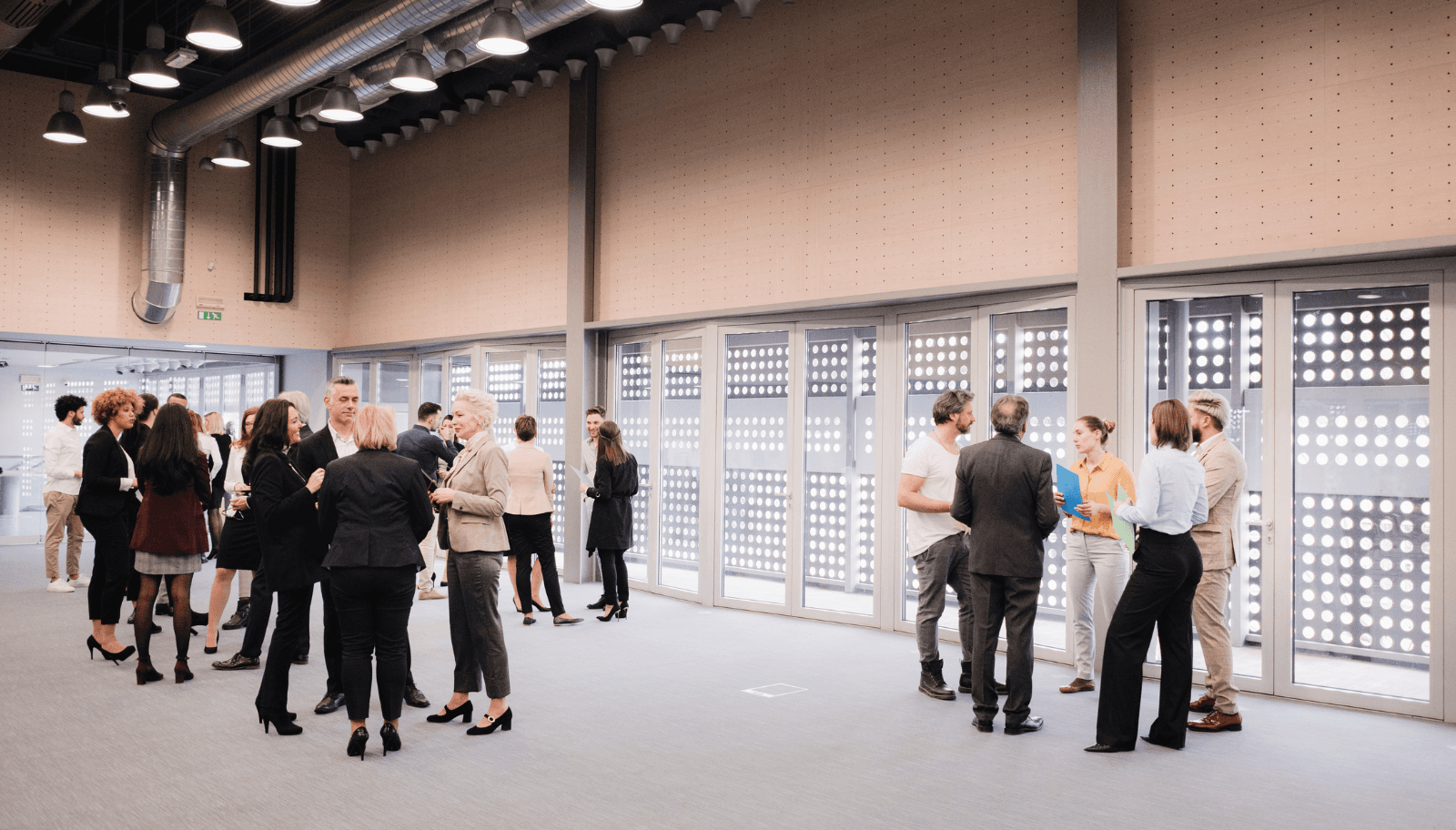
Here's what attendee support looks like at each size, and why the same assistant holds at every one of them.
Double the Guests, More Than Double the Questions
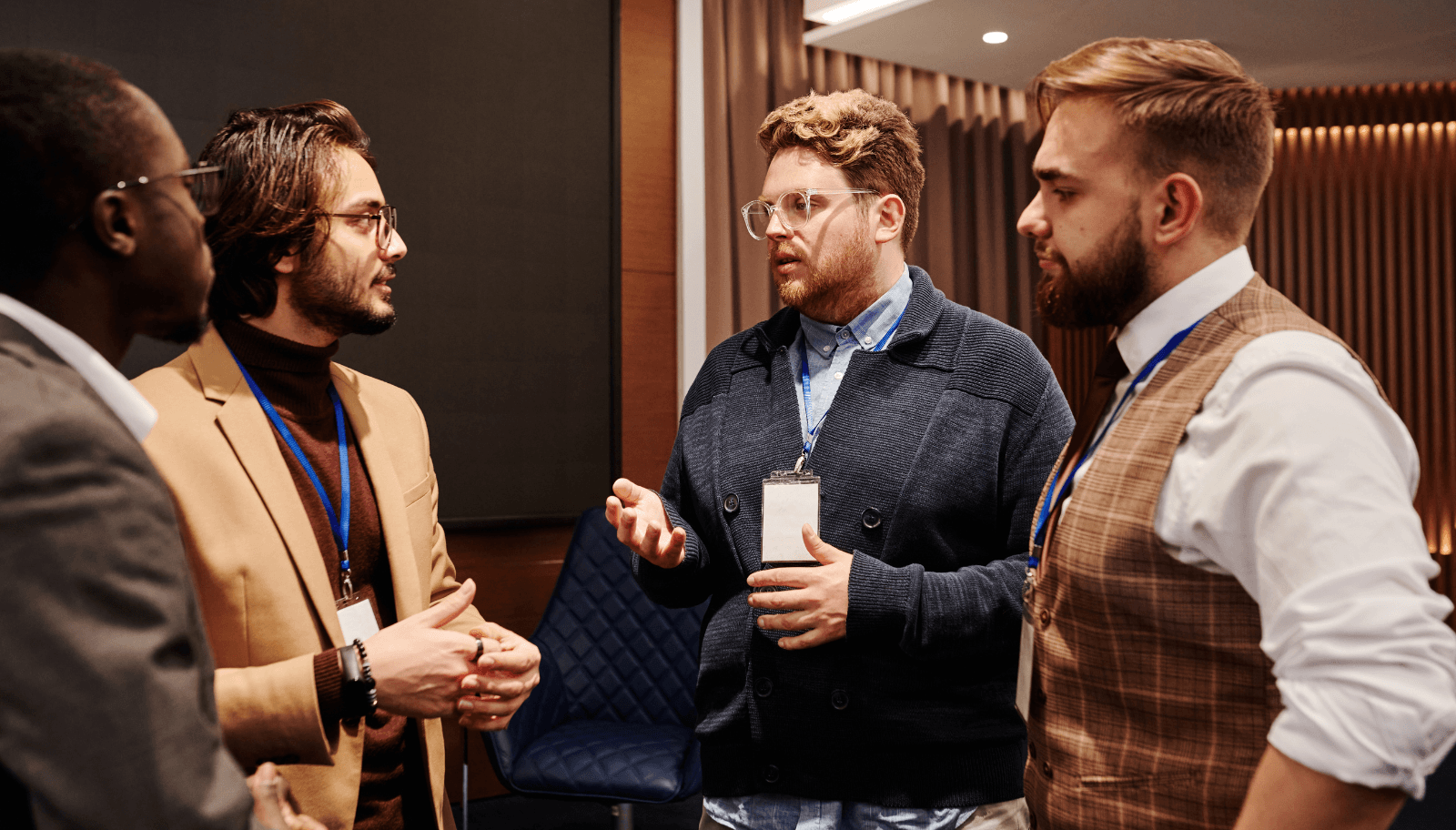
Support load doesn't grow in a straight line. At 50 attendees, the organizer is the help desk — every question lands in one inbox, and it's manageable because you can hold the whole event in your head. At 500, you appoint a volunteer with a clipboard. At 5,000, it's an information desk, then two, then a printed map that everyone ignores. At 50,000, support is a department with a queue, and the queue is where the guest experience goes to wait.
The pattern underneath: the same forty-odd questions, repeated by more people, across more languages, into more channels. Hiring more desk staff treats the repetition, not the cause.
What Attendees Ask

Spend an hour near any information desk and you'll hear the same short list, phrased a thousand ways:
- “What sessions are happening right now?”
- “Where is the keynote hall?”
- “Who's speaking at 2 PM?”
- “Where can I get lunch?”
None of these require judgment. Every answer already exists in your schedule, your floor plan, your vendor list. Yet each one interrupts a person to retrieve information a machine could recite instantly — and at scale, that retrieval is the whole job. An event AI assistant takes the list and answers it in seconds, 24/7, so the humans at your event handle the questions that need a human.
At 50 Attendees: One Organizer, Zero Staff
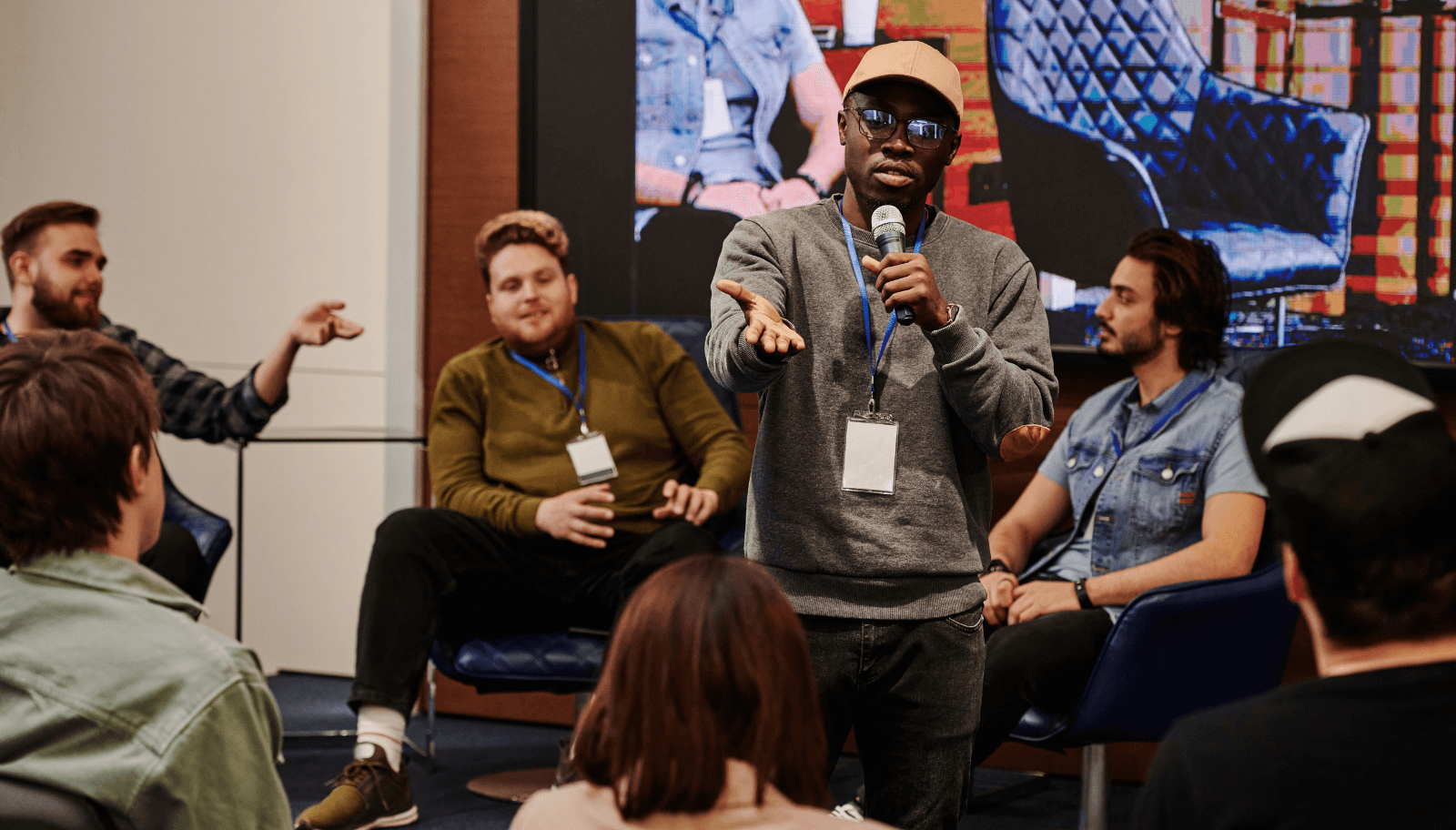
Small events rarely think they need support infrastructure. Then the organizer spends the morning session typing directions to the parking garage instead of hosting. At this size, an AI concierge is less about volume and more about presence: attendees scan a QR code, connect through the messaging app already on their phone — no download, no account — and ask anything, any time. The assistant answers like a well-briefed member of your team, because that's what you made it. For a 50-person meetup, it's the difference between hosting the room and being hostage to it.
At 5,000: The Multilingual Test

Mid-size is where human-only support starts to crack, for two reasons. First, concurrency: a schedule change between sessions can send hundreds of people looking for answers in the same ten minutes. Second, language: an international audience means the same question arrives in a dozen languages, and no info desk staffs all of them.
An event AI assistant doesn't have a peak hour. It converses in 126 languages with automatic detection and zero configuration, so the attendee asking in Portuguese and the one asking in Japanese get the same instant, correct answer. Schedule, speakers, rooms, lunch — covered, at the moment each person asks.
At 50,000: The Same Event AI Assistant, Minus the Queue

Mega-scale events prove the model, because the assistant that answered 50 attendees answers 50,000 the same way — one conversation at a time, simultaneously. Around the Q&A layer, the platform scales with you: broadcast messages reach a whole track, the VIP list, or every sponsor in seconds; the analytics dashboard shows what attendees are asking and where the flow is thick, live. Scalability from 50 to 50,000+ attendees isn't a bigger version of the product. It's the same product, which is exactly why it doesn't buckle.
The results hold up too. At one 1,000-attendee conference running AI Ambassador, attendee satisfaction rose 35%, staff costs dropped by $3,000, and no-shows fell from 25% to 12% — and the ground those numbers stand on is simple: answers that arrive instantly, in the attendee's own language, whenever they're asked.
Frequently Asked Questions
Can one AI assistant handle a 50,000-person event?
Yes — scalability from 50 to 50,000+ attendees is a core design property, not a premium tier. Each attendee gets their own conversation with the assistant through the messaging app they already use, so a full keynote break looks like thousands of one-to-one chats rather than one crushed queue. Broadcast messaging and live analytics sit on top for the event team.
How do attendees connect with an event AI assistant?
They scan a QR code. The conversation opens in a native messaging channel on their phone — no app download, no account creation, no password to forget on day two — and multiple attendees from the same party can each connect independently.
Does an event AI assistant work for small events?
It works especially well for small events, where there's no staff to absorb questions at all. The organizer loads the event's details once; the assistant covers schedule, directions, and logistics 24/7. The 50-person workshop gets the same instant answers as the stadium show, without the organizer typing directions to the parking garage during their own opening remarks.
See What Your Event Looks Like With Instant Answers
Instant answers at every gate, hall, and lunch line — request a demo of AI Ambassador for your next event.