Key Takeaways
- RCS Business Messaging supports rich media, interactive buttons, and conversational experiences that drive higher engagement and conversions than traditional SMS.
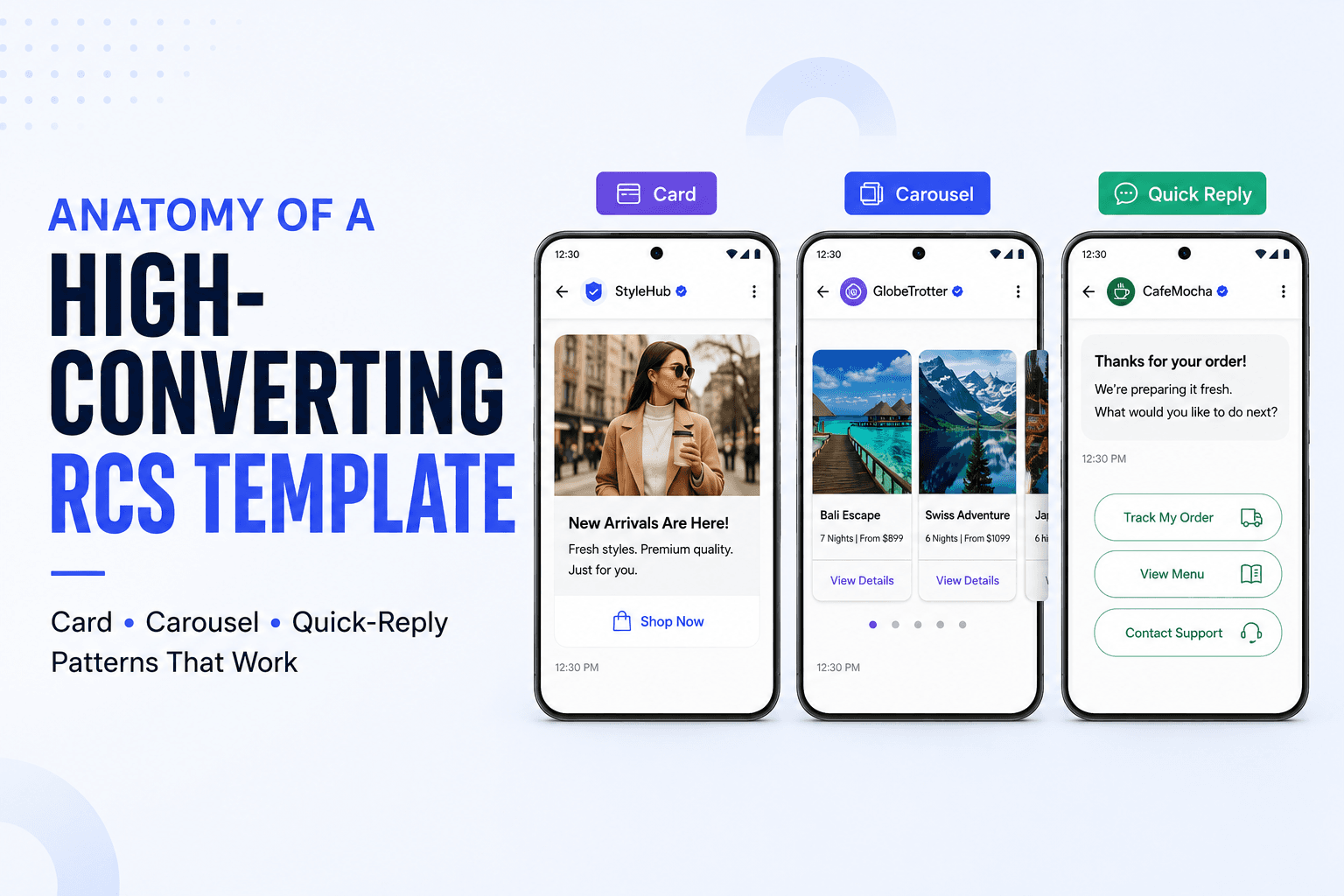
- The three highest-performing RCS template patterns are single cards, carousels, and quick replies — each suited to a different customer decision.
- Every winning template shares the same foundation: a branded sender profile, a clear headline, one primary call-to-action, and an SMS fallback.
- The most successful campaigns combine patterns — but they always focus on a single primary goal per message.
RCS Business Messaging is transforming how brands communicate with customers. Unlike traditional SMS, RCS supports rich media, interactive buttons, and conversational experiences that drive higher engagement and conversions.
The most successful RCS campaigns are not built around design alone. They are built around proven message structures that make it easier for customers to take action.
Why RCS Templates Matter
RCS gives businesses a richer communication experience directly inside the native messaging app. The most effective RCS templates follow repeatable patterns that reduce friction and increase engagement.
Benefits of RCS Templates
- Rich images and videos
- Interactive buttons
- Swipeable carousels
- Suggested replies
- Branded business profiles
- SMS fallback support
Best Practices
- One visual focus
- One primary action
- Minimal distractions
The Universal Structure of High-Converting RCS Templates
Every successful RCS message shares the same foundation. Get these components right and the rest of the design falls into place.
Essential Template Components
Branded sender profile
Hero image or media
Clear headline
Short supporting copy
Primary call-to-action
SMS fallback option
RCS Template Pattern #1 – Single Card Templates
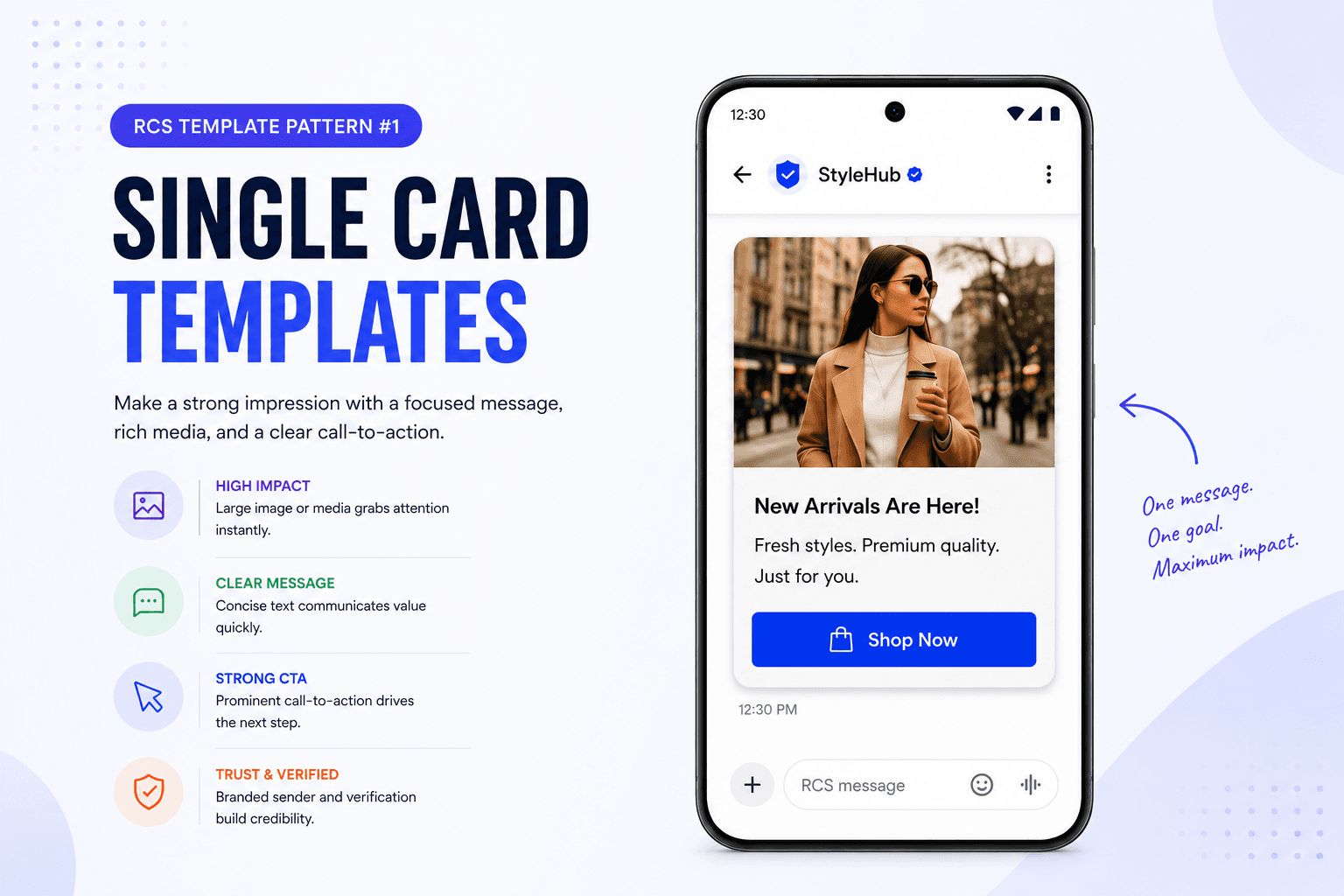
Single card templates are ideal when you want the customer to make one decision. They keep the decision path simple, create a clear visual hierarchy, and enable fast interaction.
Common Use Cases
- Promotions
- Product announcements
- Appointment reminders
- Hospitality offers
- Service updates
Best Practices
- Use benefit-focused headlines
- Show the desired outcome in the image
- Use action-oriented CTA buttons
- Include SMS fallback support
RCS Template Pattern #2 – Carousel Templates
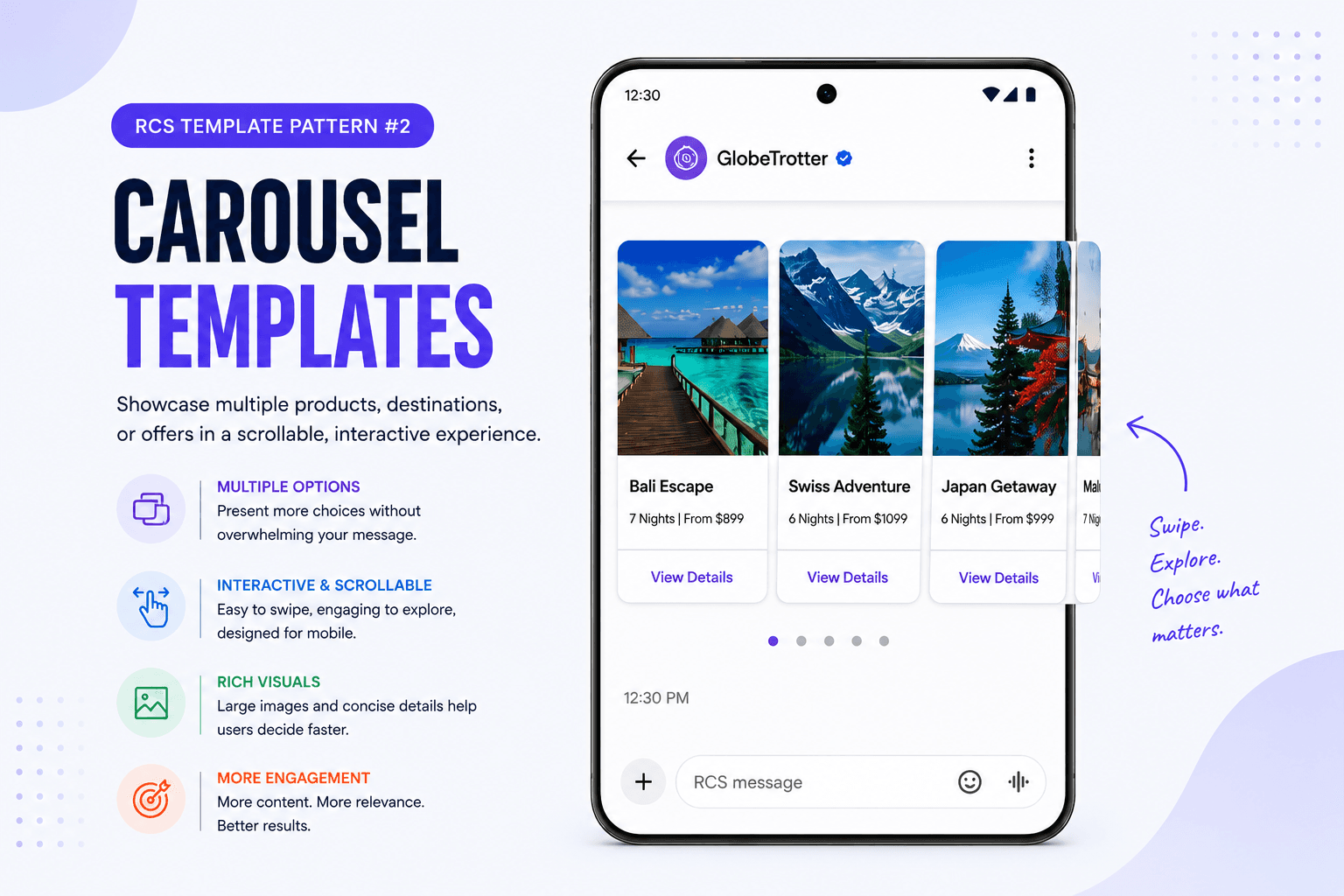
Carousel templates allow businesses to present multiple options inside a single message. They encourage exploration, reduce click friction, and bring browsing directly into the inbox.
Common Use Cases
- Product catalogs
- Event sessions
- Travel recommendations
- Hospitality experiences
- Service packages
Best Practices
- Place your strongest offer first
- Limit carousels to 5–8 cards
- Use one CTA per card
- Keep card content concise
RCS Template Pattern #3 – Quick Reply Templates
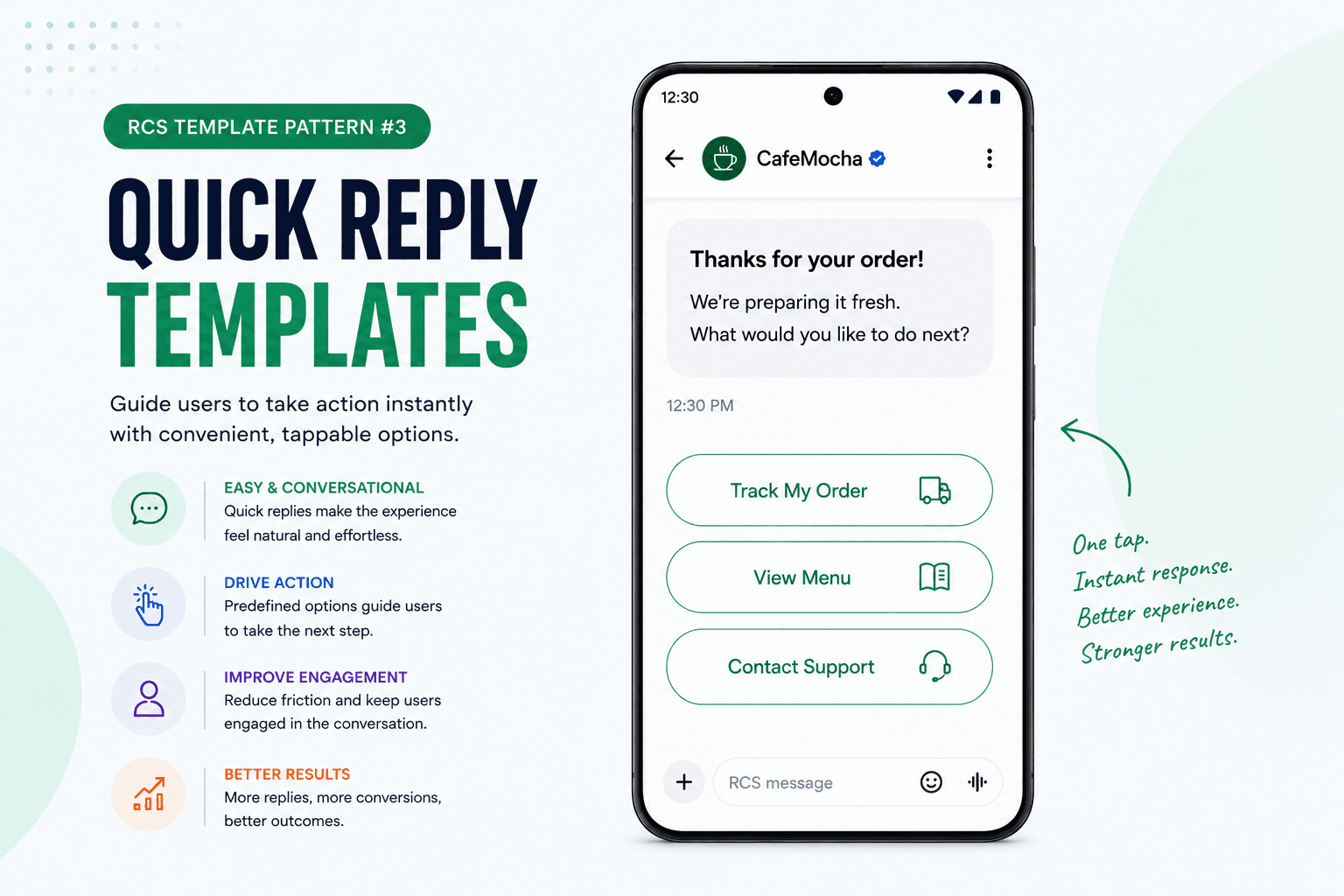
Quick replies reduce effort by allowing customers to respond with a single tap. They eliminate typing, improve response rates, and create conversational experiences.
Common Use Cases
- Preference collection
- Appointment scheduling
- Customer support routing
- Lead qualification
- Event engagement
Best Practices
- Use 3–5 reply options
- Make actions clear
- Ask a direct question
- Keep replies concise
Combining Multiple RCS Template Patterns
Many of the highest-performing RCS campaigns combine multiple patterns. The goal is simple: show something valuable and make it easy to act.
Single card + quick replies
Carousel + action button
Promotion card + suggested actions
Event carousel + registration CTA
Five Best Practices for Higher RCS Engagement
Focus on One Primary Goal Per Message
Avoid presenting multiple competing actions within a single message.
Use Visuals That Reinforce the Offer
Images and videos should support the message and desired outcome.
Keep Content Mobile-Friendly and Scannable
Most users will engage with RCS messages on mobile devices.
Personalize Messages Whenever Possible
Personalization increases relevance and customer engagement.
Always Test the SMS Fallback Experience
Ensure customers receive a consistent experience even when RCS is unavailable.
How Msg2ai Simplifies RCS Template Creation
Msg2ai helps businesses create and manage intelligent messaging campaigns across channels. Businesses can automate conversations, personalize messaging at scale, support rich messaging formats, and manage communication across multiple channels including SMS and WhatsApp.

AI-powered messaging automation
Personalized customer engagement
Omnichannel communication
Campaign automation
Rich messaging support
Analytics and performance insights
Conclusion
High-converting RCS templates are built around structure, not complexity. Whether you use single cards, carousels, or quick replies, the most successful campaigns focus on delivering a clear message, presenting a clear action, and making customer interaction effortless.
Businesses that adopt proven RCS template patterns can create more engaging conversations while improving customer response rates and overall campaign performance.
Frequently Asked Questions
What is an RCS template?
An RCS template is a pre-designed business messaging format that includes rich media, interactive buttons, carousels, and suggested replies to improve customer engagement.
What are the main types of RCS templates?
The most common RCS templates are single card templates, carousel templates, and quick reply templates.
Why do carousel RCS templates perform well?
Carousel templates allow customers to browse multiple options directly inside the messaging experience without leaving the conversation.
How many quick reply buttons should an RCS message contain?
Most high-performing RCS messages use between three and five quick reply options.
What is the biggest RCS template optimization mistake?
Trying to promote multiple actions within a single message. High-converting templates typically focus on one primary objective.
Build High-Converting RCS Campaigns with AI Ambassador
Put proven RCS template patterns to work — cards, carousels, and quick replies with built-in SMS fallback.